How to Choose the Right Plastic Injection Mold for Your Project?
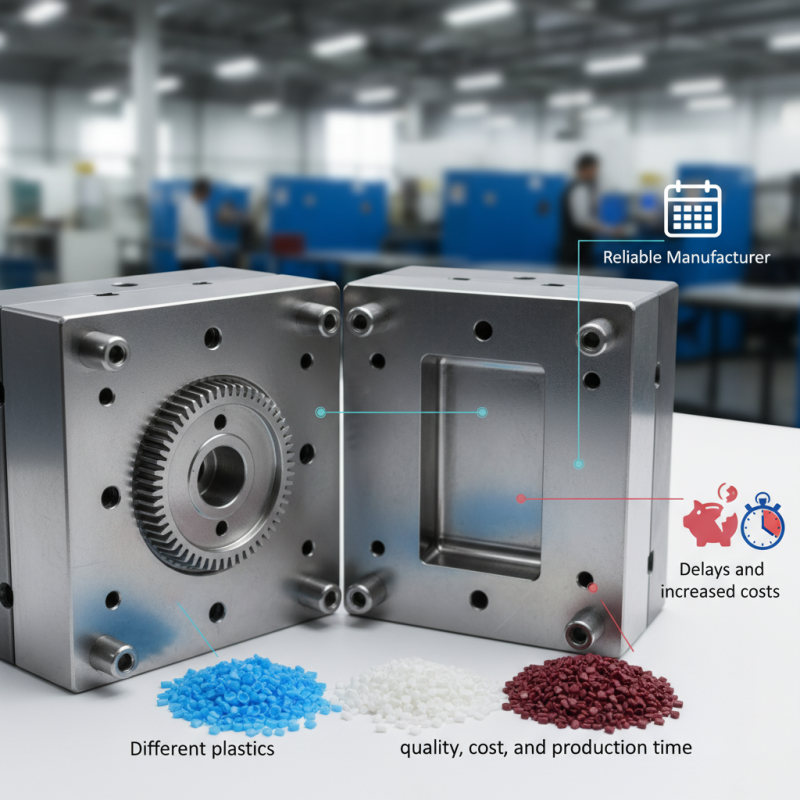
Choosing the right Plastic Injection Mold is crucial for any project. The right mold can make or break a product's success. It impacts quality, cost, and production time.
When selecting a mold, consider the design intricacies. A complex design may require advanced technology. Simple molds might have quicker turnaround times. Think about the material too. Different plastics require specific molds tailored for their properties.
Don’t overlook the importance of a reliable manufacturer. Poor communication can lead to misunderstandings. Review past projects to gauge their reliability. Reflect on your project's needs. Are you prioritizing speed or precision? The wrong choice could lead to delays and increased costs.
Understanding Plastic Injection Molding: A Basic Overview
Plastic injection molding is a key process in manufacturing. It involves injecting molten plastic into a mold to create various products. This method is efficient and widely used in industries such as automotive, medical, and consumer goods. According to a report by Mordor Intelligence, the global plastic injection molding market is expected to reach $474.67 billion by 2026, reflecting the increasing demand for plastic products.
When venturing into plastic injection molding, understanding material selection is crucial. Different materials offer unique properties. For instance, ABS is known for its toughness, while polycarbonate is highly transparent. Each material can affect the mold's design and longevity. Be mindful of the requirements of your project to avoid costly mistakes later.
Tips: Always prototype before mass production. This can save time and resources. Engage in discussions with manufacturing experts. Their insights can refine your approach. Inspect your designs regularly, as minor errors can lead to significant setbacks in production. Use simulation tools to visualize the molding process. This practice can help identify issues early.
Identifying Key Project Requirements for Mold Selection
When selecting a plastic injection mold, it’s essential to identify your project requirements. Start by determining the material. Different plastics behave differently. Consider how the material expands and contracts during cooling. This will affect mold choice significantly.
**Tips:** Evaluate the end-use of the product. Will it bear heavy loads? Must it withstand high temperatures? These questions guide your selection.
Next, think about the part design. Complex shapes may need more sophisticated molds. Simplicity can lead to lower costs. Balance complexity with your budget. Ensure your design supports efficient manufacturing.
**Tips:** Collaborate with your team. Feedback can reveal overlooked aspects. Review the design scheme to improve mold effectiveness.
Finally, consider the production volume. Is this a one-time project or a long-term run? High-volume production requires durable molds. Low-volume jobs can use simpler molds. Reflect on your timeline as well. Wait times vary based on mold complexity.
**Tips:** Adaptability is key. If requirements change, be open to revisiting your mold choice. Efficient choices now can save money later. The goal is to meet your project’s needs while staying flexible.
How to Choose the Right Plastic Injection Mold for Your Project?
| Key Requirements | Description | Importance Level | Example Materials |
| Production Volume | Determine the number of parts required to assess mold durability. | High | Polyethylene, Polypropylene |
| Part Complexity | Evaluate intricacies in design to choose the right molding technique. | Medium | ABS, Nylon |
| Material Type | Select appropriate materials based on mechanical properties required. | High | PVC, Polycarbonate |
| Lead Time | Consider how quickly the mold needs to be produced. | Medium | Various thermoplastics |
| Cost | Assess budget constraints for mold creation vs. return on investment. | High | All types |
Evaluating Material Compatibility with Injection Molds
Choosing the right plastic injection mold for your project demands careful consideration of material compatibility. The material you select impacts the mold's performance and durability. Many options exist: thermoplastics, thermosets, and elastomers. Each has unique properties and can react differently during the injection process. Understanding these characteristics is essential.
For instance, thermoplastics like ABS are easy to mold and have good impact resistance. However, they may not withstand high temperatures well. On the other hand, materials like polycarbonate offer excellent strength but may require more precise mold design and processing conditions. A mismatch could lead to defects or reduced lifespan. Pay attention to the melt flow index of your chosen material. It must align with the mold design to ensure proper fill and avoid issues.
Testing is often overlooked but crucial. Conduct small trials to assess how your selected material behaves in the mold. Observe potential warpage or shrinkage. Sometimes, results may surprise you. You could find that a different material performs better than expected. Evaluating these aspects ensures a smoother production process and better final products. Failing to do so can lead to wasted resources and time.
Choosing Between Custom and Standard Molds: Pros and Cons
When selecting a plastic injection mold, the choice between custom and standard molds can be crucial. Custom molds are designed for specific projects, offering tailored solutions. This can lead to enhanced efficiency and better fit for unique designs. However, the cost is often higher. Custom molds may take longer to produce. This can impact project timelines.
On the other hand, standard molds are more readily available. They can save time and money. However, they may not perfectly meet your specifications. Some projects require tweaks that standard molds can't provide. This can lead to compromises in quality or functionality. It’s essential to weigh the pros and cons carefully.
Think about your project’s requirements. Lack of standardized options might hinder innovation. On the flip side, overly specific custom molds could lead to budget overruns. Make sure to consider both options thoroughly. Each has its drawbacks, and the best choice will depend on your project’s unique needs. Balancing cost, time, and quality will guide you towards the right mold.
Comparison of Custom vs. Standard Plastic Injection Molds
This chart compares the advantages and disadvantages of Custom and Standard Plastic Injection Molds based on five key criteria: Cost, Lead Time, Flexibility, Quality, and Complexity. Each criterion is rated on a scale of 1 to 10, with higher scores indicating better performance.
Assessing Manufacturer Capabilities and Experience in Molding
When choosing a plastic injection mold, evaluating manufacturer capabilities is crucial. A reputable manufacturer should have extensive experience. According to the American Society of Plastics Engineers, over 40% of projects fail due to poor mold design or production flaws. Manufacturers must ensure high-quality tooling and precision.
Look for manufacturers who have invested in advanced technology. Data shows that using CNC machining can improve mold accuracy by up to 30%. It’s essential to ask about their prototyping capabilities. Fast prototyping allows for adjustments early in the process, avoiding costly changes later.
Experience plays a key role in project success. A manufacturer’s history with similar projects offers insights into their expertise. Transparency in their process and past results can reflect reliability. Check reviews and case studies, but remember, no manufacturer is infallible. Even the best may have faced setbacks. Understanding these potential challenges can help you find the right fit for your project needs.