What Is Hot Isostatic Pressing and How Does It Work?
What happens inside a metal component when heat and pressure work from every direction? Hot Isostatic Pressing, commonly called HIP, answers this question through controlled temperature, gas pressure, and time. Unlike conventional pressing, it compresses parts uniformly inside a sealed vessel. Argon usually provides the pressure. Heat activates plastic flow and diffusion, helping close internal pores and improve material consistency.
The industrial relevance is growing. Wohlers Report 2024 valued the global additive manufacturing industry at approximately $20.035 billion in 2023, with year-on-year growth of 13.5%. Many aerospace, medical, energy, and tooling companies now examine HIP for critical metal parts made by powder-bed fusion or casting. ASTM F3184 provides guidance for HIP processing of additively manufactured metal parts. It highlights the need for qualified parameters, suitable materials, and documented process control. A dense surface can still hide internal defects.
That caveat matters. HIP is powerful, but it is not magic. The cycle cannot correct every design weakness, contamination issue, or unsuitable alloy. Engineers must connect powder quality, build orientation, temperature, pressure, cooling rate, and inspection results. A titanium component may enter the vessel with tiny, gas-filled voids. After treatment, those voids can shrink dramatically, improving fatigue performance and reliability. However, dimensional changes may occur, and machining allowances must be planned carefully. Industry reports often show strong market potential, yet published figures vary by definition and region. Careful readers should question broad forecasts. This guide explains what Hot Isostatic Pressing is, how the equipment works, and where its benefits—and limitations—matter most.
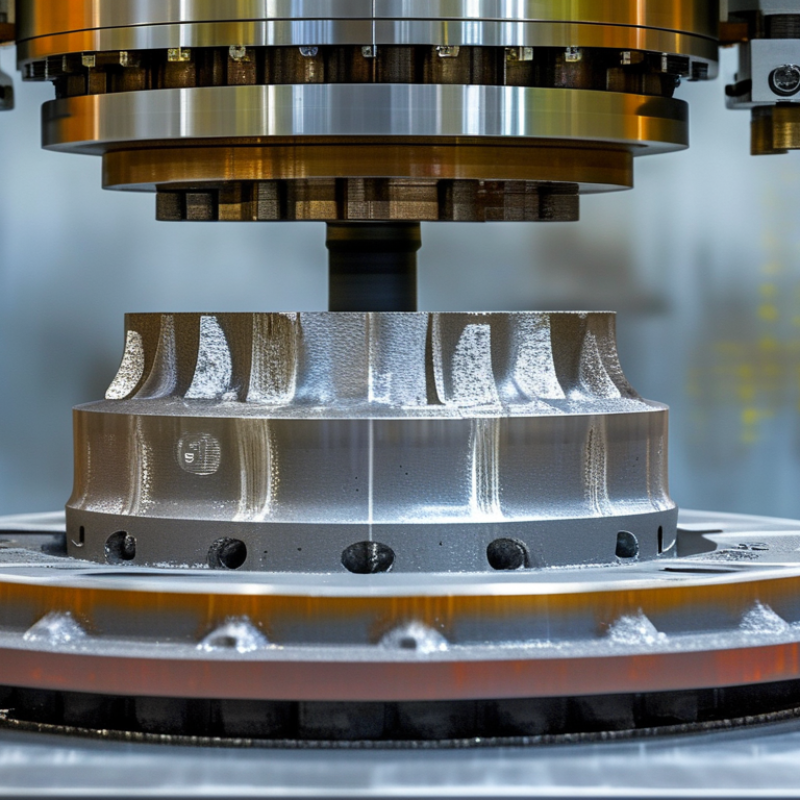
What Is Hot Isostatic Pressing?
Hot isostatic pressing, or HIP, is a thermal manufacturing process that combines high temperature and uniform gas pressure. The pressure usually comes from an inert gas inside a sealed chamber. Unlike ordinary pressing, HIP applies force from every direction. This helps compact metal powders and close internal pores in cast or additively manufactured parts.
During a typical cycle, technicians load the component into a pressure vessel, raise the temperature, and increase gas pressure under controlled conditions. Heat allows the material to deform slowly, while pressure pushes internal voids together. Atoms then diffuse across the contact surfaces, forming stronger bonds. The result can be higher density, better fatigue resistance, and more consistent mechanical performance.
It is not a cure-all.
HIP cannot reliably repair every defect. Open cracks, contamination, or poorly designed geometry may remain serious problems. Engineers must select temperature, pressure, holding time, and cooling rates for the specific alloy. Excessive heat can cause grain growth or unwanted dimensional changes. Careful records matter. In practical work, operators often compare density measurements, dimensional checks, and microscopic inspections before approving a part. The process is powerful, but cycle selection still involves testing and informed judgment.
What Is Hot Isostatic Pressing and How Does It Work?
Hot Isostatic Pressing (HIP) applies high temperature and uniform gas pressure to eliminate internal pores, close voids, and improve the density and mechanical reliability of metal components. The chart shows a representative HIP cycle for a titanium alloy component; actual settings vary by material, geometry, and required properties.
During the hold stage, argon gas pressure acts equally in all directions while the component is heated. This combination promotes plastic deformation and diffusion, allowing internal pores to collapse and the material to become more uniform.
The Main Components of an HIP System
What Is Hot Isostatic Pressing and How Does It Work?
The Main Components of an HIP System
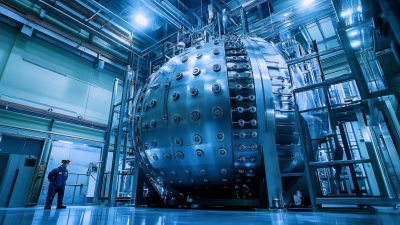
A hot isostatic pressing system combines heat, pressure, and controlled gas movement. Its pressure vessel is the central component. It must withstand repeated cycles near 100–200 MPa and temperatures above 2,000°C for selected materials. ASME Boiler and Pressure Vessel Code Section VIII guides vessel design and safety calculations. The vessel is the obvious hero, but that view is incomplete.
Inside, electric heating elements create a uniform thermal field around the workload. Insulation reduces heat loss and protects the vessel wall. An argon supply, compressor, valves, and circulation paths control the pressure medium. Argon is preferred because it usually remains chemically inactive during processing. The loading system must position parts carefully. Small gaps can affect gas flow and temperature balance.
Cooling equipment then removes heat in a controlled sequence. Rapid cooling can shorten production time, but it may increase thermal stress. The control system records pressure, temperature, gas flow, and cycle duration. It also triggers alarms when readings leave approved limits. Real production is less tidy. Sensors drift, insulation ages, and batch geometry changes. Therefore, calibration and documented maintenance remain essential. The 2024 Wohlers Report valued the global additive manufacturing industry at 20.035 billion dollars in 2023, supporting continued demand for HIP-based densification of critical printed parts. Yet, not every component needs HIP treatment. Careful cost and performance review still matters.
How the Hot Isostatic Pressing Process Works
Hot Isostatic Pressing, or HIP, combines heat and gas pressure to densify metal parts. The workpiece enters a sealed vessel filled with inert gas, usually argon. Temperatures commonly reach 900–2,000°C, while pressure may reach 100–200 MPa. Exact settings depend on the alloy and part geometry.
The HIP cycle starts by heating the load under controlled pressure. Gas pushes equally from every direction. This pressure closes internal pores through creep and localized plastic flow.
The material becomes denser, stronger, and more uniform. After holding the target temperature, operators cool the part under pressure. That step matters. Rapid depressurization can damage dimensional stability.
HIP can process castings, powder-based components, and metal additive-manufactured parts. ISO/ASTM 52904:2019 identifies post-processing controls as important for reliable additive manufacturing quality. The 2024 Wohlers Report recorded a global additive manufacturing industry value of about 20.0 billion dollars in 2023, showing why dependable densification methods matter.
However, HIP is not a magic repair stage. Surface-connected defects may remain open, and distorted geometry can still occur. A polished process diagram hides these risks.
Engineers must verify density, dimensions, microstructure, and tensile properties through inspection and testing. The final result depends on more than pressure alone. It depends on powder quality, thermal history, vessel uniformity, and careful parameter control.
Materials and Products Made with HIP
Materials and Products Made with HIP
Hot Isostatic Pressing, or HIP, uses high temperature and uniform gas pressure to compress materials from every direction. This treatment can close internal pores and improve density without creating strong directional forces. In practical manufacturing, titanium alloys often receive HIP treatment for aerospace brackets, engine structures, and medical implants. Nickel-based superalloys benefit too, especially in turbine blades and other heat-resistant components.
HIP also improves parts made from stainless steels, tool steels, aluminum alloys, and selected ceramics. Manufacturers use it for pressure valves, molds, cutting tools, and complex metal parts produced by additive manufacturing. These products may show better fatigue resistance, toughness, and dimensional reliability after suitable processing. However, HIP is not magic. Poor powder quality, contamination, or incorrect temperature control can still damage performance. That assumption needs checking.
The process can also bond separate metal surfaces, creating layered or repaired components. Engineers usually inspect parts with computed tomography, microscopy, density testing, and mechanical trials. Those checks help confirm whether internal defects were actually reduced. In my view, the most valuable HIP products are not always the largest ones. A small implant or thin-walled valve may gain more practical value from improved reliability than a visibly large component. Results depend on alloy condition, pressure cycles, cooling speed, and final machining. More testing is often wiser than confident wording.
Key Benefits and Limitations of Hot Isostatic Pressing
Hot Isostatic Pressing (HIP) combines high temperature and uniform gas pressure to improve manufactured components. A sealed chamber heats a part while inert gas presses evenly from every direction. Unlike conventional pressing, HIP does not rely on a single mechanical force. Internal pores can shrink or close, especially in castings and additively manufactured parts.
The main benefit is improved density and fatigue performance. For example, a turbine component with tiny internal voids may become more reliable after treatment. HIP can also reduce material variation and support near-net-shape production. Engineers often inspect parts before and after processing, using microscopy, density measurements, and non-destructive testing. These checks provide evidence rather than optimistic assumptions.
However, HIP has real limitations. The equipment requires substantial energy, long processing cycles, and strict temperature control. Parts may also distort, grow slightly, or develop unwanted microstructural changes. Complex assemblies can be difficult to treat because trapped gases or different materials respond unevenly. The process is not a universal repair method. Poorly designed parts may remain weak after pressing. Results depend on alloy chemistry, pore structure, temperature, pressure, and cooling rate. A practical process window must be tested carefully. Some published improvements may look impressive, but they do not always predict service performance. That uncertainty deserves attention.