How to Choose a Cold Isostatic Pressing Machine in 2026?

Choosing a Cold Isostatic Pressing Machine in 2026 requires more than comparing maximum pressure and purchase price. The right decision begins with the powder, part geometry, production volume, and required density. A small laboratory unit may suit development work, while a factory needs stable cycles, automated loading, and dependable uptime. The machine must match the process.

Pressure matters. So does control.

In practical evaluations, engineers should examine the working chamber, pressure medium, temperature range, sealing design, and decompression speed. A machine rated for 600 MPa may appear attractive, but its useful performance depends on pressure uniformity and repeatability. Ask suppliers for cycle data, maintenance records, calibration procedures, and references from comparable applications. A polished brochure is not enough. Parts should be tested before a major purchase, using the actual powder and mold materials whenever possible.

Safety systems deserve equal attention. Check door interlocks, pressure monitoring, emergency release functions, operator access, and documented inspection routines. Service response can determine whether a production line loses hours or several weeks. Energy use, spare-part availability, software support, and operator training also affect long-term cost. These details are easy to underestimate.

The best choice is rarely the most powerful machine. It is the one that produces consistent parts without creating unnecessary complexity. Still, no selection guide can remove every uncertainty. Material behavior may change after scale-up, and early test results can mislead. Keep a margin for learning. A careful comparison, supported by supplier evidence and independent process verification, gives buyers a more reliable foundation for 2026 and beyond.
How to Choose a Cold Isostatic Pressing Machine in 2026?

What Is Cold Isostatic Pressing and How Does It Work?

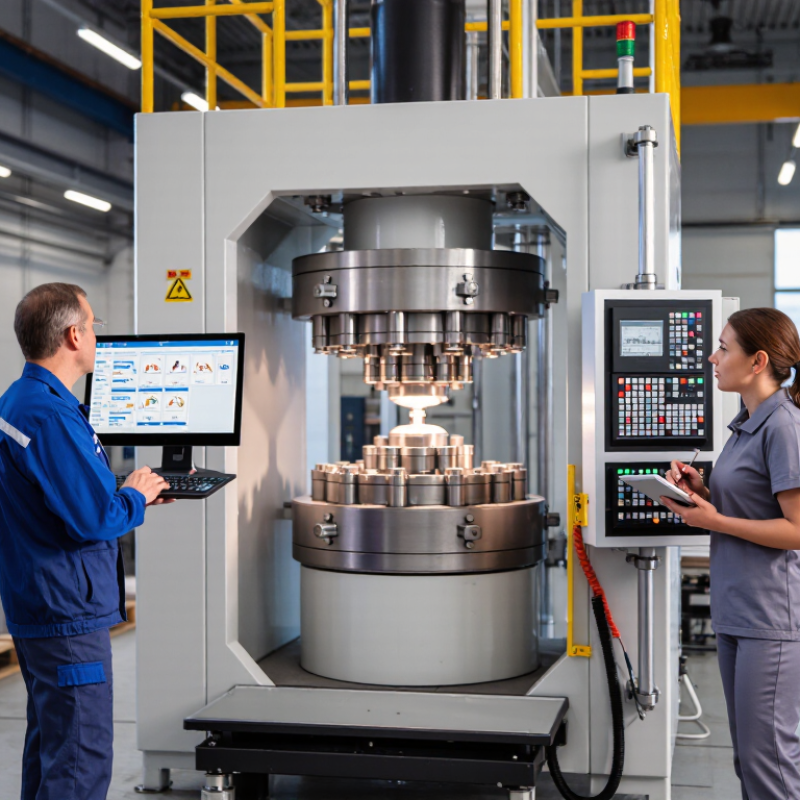
Cold Isostatic Pressing, or CIP, compacts powder inside a flexible mold using liquid pressure. The pressure surrounds the mold from every direction. This creates a more uniform green compact than ordinary one-sided pressing. Ceramic, metal, graphite, and advanced material powders can be shaped this way. The mold usually contains water-based fluid, while a high-pressure vessel provides the working space. A pump raises pressure gradually, and the fluid transmits force through the mold wall. After decompression, the compact is removed for drying, machining, or sintering.

A CIP machine should match the powder, mold size, production volume, and required density. Check maximum pressure, chamber diameter, pressure stability, and loading method. Uniform pressure matters more than impressive numbers. Reliable sensors and recorded pressure curves help identify defects during production.

In my experience, mold sealing often deserves more attention than expected. A small leak can create density variation or surface damage. In practice, the first trial is rarely perfect. Material behavior changes with moisture, particle size, and filling technique. Leave room for process adjustment.

Tips:

Test a small batch before buying a large machine. Ask for pressure uniformity data, not only rated pressure. Inspect the control system and emergency protection carefully. Confirm whether operators can clean the vessel safely. Also, calculate maintenance time and energy use. A machine that presses quickly may still perform poorly with delicate molds.

Which Material, Shape, and Production Requirements Must Be Defined?

How to Choose a Cold Isostatic Pressing Machine in 2026?

Selecting a cold isostatic pressing machine starts with defining the material, not the machine. Record powder type, particle size, moisture, binder content, and sensitivity to contamination. These details affect filling, pressure transfer, and demolding. Ceramic powders may need different pressure behavior than metal powders. Test compressibility before approving a specification. A sample may look stable, then crack after drying. That happened in one development trial, and the original pressure target needed revision.

Shape matters just as much. Measure diameter, height, wall thickness, and aspect ratio. Note holes, cavities, thin edges, and tight tolerances. Flexible molds support many geometries, but sharp transitions can create density differences. Define the required green strength and final shrinkage range. Also check mold life, loading access, and whether operators can remove parts without distortion.

Tips: Match vessel size to the largest practical mold, not only today’s part. Define pressure, holding time, cycle time, batch quantity, and daily output. Ask for pressure uniformity data and process records. Confirm utilities, noise controls, maintenance access, and operator training. Automation may improve repeatability, but it can add setup complexity. Keep a trial plan with measurable results. Production estimates often look optimistic. Recheck them using real loading and unloading times.

How to Choose a Cold Isostatic Pressing Machine in 2026? - Which Material, Shape, and Production Requirements Must Be Defined?

Requirement to Define Relevant Data Typical Engineering Range or Example Why It Matters for Machine Selection Information to Confirm Before Ordering
Powder Material Material family, powder chemistry, particle size, flowability, moisture sensitivity, and toxicity Ceramics, cemented carbides, graphite, refractory powders, metal powders, and other powders that can be compacted in a flexible mold The material determines the required pressure, mold compatibility, loading method, contamination controls, and post-pressing treatment Provide the powder technical data sheet, particle-size distribution, bulk density, target green density, and required cleanliness level
Target Green Density Required density after cold isostatic pressing and allowable density variation Often specified as a percentage of theoretical density; the exact value depends on powder type, binder system, and subsequent sintering route Higher density or tighter uniformity may require higher pressure, improved powder preparation, optimized filling, and controlled decompression Define minimum density, average density, density distribution, and the test method used for verification
Required Pressing Pressure Maximum working pressure, pressure-holding time, pressure ramp, and decompression rate Common planning ranges are approximately 100–400 MPa; some specialized systems operate up to about 600 MPa The pressure rating affects vessel design, safety systems, pump capacity, energy consumption, tooling life, and capital cost Select a machine with a rated working pressure above the validated process requirement, not merely above the average operating pressure
Part Shape and Geometry Overall dimensions, wall thickness, length-to-diameter ratio, cavities, undercuts, and dimensional tolerances CIP is well suited to complex, curved, hollow, and near-net-shape preforms that are difficult to compact uniformly with uniaxial pressing The geometry determines flexible-mold design, support requirements, filling access, demolding method, and risk of distortion Submit a 2D drawing or 3D model with critical dimensions, deformation limits, and post-sintering shrinkage allowance
Part Size and Working Zone Maximum part length, diameter or width, mold envelope, vessel inner diameter, and usable height The usable work zone must accommodate the mold, fixtures, pressure-transmitting fluid, and safe clearance around the load A vessel that is too small limits product size; an unnecessarily large vessel increases installation cost, fluid volume, and cycle time Confirm internal vessel dimensions rather than external machine dimensions, including loading and maintenance clearance
Mold and Bag Material Elastomer type, wall thickness, sealing method, mold reuse, chemical compatibility, and allowable deformation Flexible polyurethane, rubber, or other compatible elastomeric tooling may be used depending on pressure, powder, geometry, and temperature The mold transfers fluid pressure to the powder and directly influences surface quality, dimensional accuracy, leakage risk, and tooling cost Define mold life, permitted release agents, sealing method, allowable contamination, and whether reusable or disposable bags are preferred
Wet-Bag or Dry-Bag Operation Mold loading method, mold change frequency, automation level, and required flexibility for different part shapes Wet-bag systems use removable molds in the pressure vessel; dry-bag systems use fixed molds integrated into the vessel or tooling arrangement Wet-bag designs generally offer greater product flexibility, while dry-bag designs can support faster and more repeatable automated production Compare mold-change time, loading ergonomics, automation compatibility, expected product mix, and cleaning requirements
Production Capacity Parts per batch, batches per shift, annual output, uptime target, and product changeover frequency Capacity is determined by batch quantity and the complete cycle, including loading, pressurization, holding, decompression, unloading, and inspection A high-pressure machine may still be unsuitable if its batch size, loading method, or changeover time cannot meet the required output Calculate capacity using a realistic cycle-time study rather than pressure-hold time alone
Cycle-Time Requirements Fill time, pressurization time, hold time, depressurization time, unloading time, and cleaning time Hold time is process-specific; total cycle time can range from several minutes to substantially longer depending on load size and pressure profile Pump flow rate, valve design, vessel volume, cooling requirements, and automation determine throughput Request a cycle-time estimate based on the actual mold volume, target pressure, load mass, and validated pressure profile
Pressure-Transmitting Fluid Fluid type, viscosity, corrosion behavior, cleanliness, filtration, maintenance, and disposal requirements Water-based fluids are commonly used, often with corrosion-inhibiting or other process-control additives appropriate to the system Fluid properties affect pump performance, seals, corrosion protection, temperature control, and contamination risk Confirm fluid compatibility with the vessel, pumps, valves, seals, molds, filtration system, and site environmental requirements
Temperature Requirement Operating temperature, allowable fluid temperature rise, and whether temperature monitoring is required Cold isostatic pressing is normally performed near ambient temperature; it is distinct from hot isostatic pressing, which uses elevated temperature Temperature control is still important for dimensional repeatability, fluid viscosity, seal life, and powder or binder stability Define the allowable temperature range and whether cooling, heating, or temperature logging is necessary
Automation and Traceability Recipe storage, pressure recording, barcode or batch identification, alarms, data export, and remote diagnostics A production system may record pressure, time, temperature, alarm status, and operator or batch information for every cycle Automation improves repeatability, reduces operator dependence, and supports quality audits and process qualification Specify required control interfaces, data format, user permissions, recipe security, and integration with factory systems
Safety and Compliance Pressure-vessel code, guarding, door interlocks, emergency stop, overpressure protection, inspection, and operator training High-pressure equipment requires documented engineering design, protective controls, inspection, and operation according to applicable local regulations Safety features affect installation approval, operating procedures, maintenance access, insurance, and total ownership cost Identify the applicable jurisdictional pressure-equipment requirements before finalizing the vessel design
Installation Conditions Floor loading, machine footprint, ceiling height, electrical supply, water supply, drainage, ventilation, and lifting access Large pressure vessels and auxiliary systems may require reinforced foundations, service access, and dedicated utilities A machine that meets the process specification may still be impractical if the building cannot support its weight, dimensions, or utilities Complete a site survey and verify foundation, transport route, utility capacity, and maintenance clearance
Quality Validation Density uniformity, dimensional repeatability, surface condition, defect rate, and post-sintering performance Acceptance criteria should be defined for green density, shrinkage, strength, porosity, dimensions, and appearance according to the product specification The correct machine is the one that repeatedly produces qualified parts, not simply the one with the highest pressure rating Use representative powder, mold geometry, and process parameters for a documented trial or factory acceptance test

Note: The ranges shown are general engineering planning references. Final pressure, vessel size, mold design, cycle time, and safety requirements must be validated for the specific powder, geometry, tooling, and applicable regulations.

How to Compare CIP Machine Types, Pressure Ranges, and Chamber Sizes?

Choosing a cold isostatic pressing machine in 2026 requires more than comparing maximum pressure.

The machine type must match your production rhythm. Wet-bag systems suit varied shapes and frequent tooling changes. Dry-bag systems support repeatable, higher-volume production. A combined design may offer flexibility, but its maintenance burden is easy to underestimate.

According to Grand View Research’s 2024 market analysis, the global CIP market is expected to expand at roughly 6% annually through 2030.

That growth does not mean every factory needs the largest press. Start with actual batch frequency, powder behavior, and required density.

Pressure ranges often fall between 100 and 600 MPa, depending on ceramic, metal, or composite applications.

Higher pressure can improve green density, but it also increases vessel cost, sealing demands, and inspection requirements.

The chamber must hold the largest tooling assembly, not just the finished part. Leave practical clearance for loading, fluid circulation, and operator access.

The 2024 Powder Metallurgy Review reports that process consistency remains strongly linked to powder preparation and compaction control, not pressure alone. That is easy to forget.

Measure chamber diameter, usable height, and basket capacity separately.

A wide chamber may still be inefficient if its working height is limited.

I would request test pressing with your own powder. Supplier curves can look convincing. Real parts are less polite.

Also compare cycle time, pressure stability, maintenance access, data logging, and compliance with applicable pressure-vessel codes. A cheaper machine may become expensive when downtime and requalification are included.

Which Control, Safety, Maintenance, and Automation Features Matter?

Choosing a cold isostatic pressing machine in 2026 requires more than comparing pressure ratings. Control quality often decides repeatability. Look for closed-loop pressure control, programmable dwell times, and pressure ramp monitoring. The interface should show real-time pressure, temperature, cycle status, and alarm history. Recipe permissions also matter. Operators should not change critical parameters casually. A useful system records user actions and exports production data for quality reviews. I prefer controls that remain understandable during stressful troubleshooting. Fancy screens can still hide weak logic.

Safety features deserve practical inspection, not only brochure reading. Check chamber interlocks, emergency stops, pressure relief systems, and automatic depressurization. The machine should prevent opening before pressure reaches a verified safe level. Ask how faults are detected after sensor drift or communication loss. This question is often overlooked. Maintenance access should be clear, with reachable seals, filters, valves, and inspection points. Predictive alerts for leakage, pump wear, and abnormal cycle time can reduce unexpected downtime. However, automation is not automatically intelligence. A poorly configured robot or loading system may repeat errors faster. Confirm manual recovery procedures, backup controls, and operator training records. Request cycle data from similar materials, then test your own powder, tooling, and production rhythm. I would not trust a perfect demonstration alone. Real factories are less tidy.

How to Choose a Cold Isostatic Pressing Machine in 2026?

Which control, safety, maintenance, and automation features matter most?

The chart presents a practical procurement weighting for evaluating cold isostatic pressing equipment. Control and safety receive the highest priority because pressure accuracy, process repeatability, guarding, emergency shutdown, and interlocks directly affect product quality and operator protection. Maintenance and automation support uptime, traceability, recipe consistency, and reduced manual intervention.

How to Evaluate Suppliers, Total Costs, and Long-Term Machine Value?

How to Choose a Cold Isostatic Pressing Machine in 2026?

Choosing a cold isostatic pressing machine starts with supplier evidence, not attractive brochures. Request pressure uniformity data, calibration records, cycle histories, and test results from comparable applications. A reliable supplier should explain pressure range, chamber size, sealing design, automation limits, and maintenance intervals in plain language. Ask for a factory acceptance test using your actual powder, tooling, and target density. Small details matter.

Total cost extends far beyond the purchase price. Include installation, operator training, utilities, tooling, spare seals, inspections, software updates, and planned downtime. A machine requiring frequent seal replacement may appear affordable but become expensive after three years. Compare energy consumption per cycle and calculate cost per acceptable part. Get service response times in writing. Verbal promises fade.

Long-term value depends on stability and adaptability. Examine the control system’s data logging, alarm history, recipe protection, and compatibility with future production changes. Speak with current users, but check their operating conditions carefully. Their results may not match yours. I would also budget for one uncomfortable possibility: commissioning may take longer than planned. A strong supplier provides troubleshooting records, operator documentation, and measurable acceptance criteria. The best decision is not always the machine with the highest pressure rating. It is the one that delivers repeatable density, manageable ownership costs, and dependable technical support.