Isostatic pressing Ceramic manufacturing begins with a simple challenge: compact powder evenly without creating weak zones. In cold isostatic pressing, powder sits inside a flexible mold, and fluid pressure acts around it from every direction. The compact may emerge denser and more uniform than one pressed from a single direction. It still needs careful drying, machining, and firing.
The market context is growing, but it needs careful interpretation. Grand View Research estimated the global advanced ceramics market at about US$11.8 billion in 2023; that figure covers many materials and processes, not isostatic pressing alone. James S. Reed, author of Principles of Ceramics Processing, emphasizes through his processing framework that powder preparation and forming strongly influence the final ceramic microstructure. This is a paraphrase, not a direct quotation. The practical lesson is clear: pressure cannot rescue poorly prepared powder. Not by itself.
For manufacturers, the method can suit complex shapes and demanding components, including electrical insulators and technical parts. Results depend on powder flow, mold design, pressure cycle, and firing schedule. A dense-looking blank is not proof of consistent internal quality. That distinction matters. This guide explains how the process works, where cold and hot isostatic pressing differ, and which production trade-offs deserve scrutiny. Some limitations remain easy to underestimate, especially when moving from a laboratory sample to repeatable production. One question stays open: how much uniformity is worth the added tooling and cycle time?
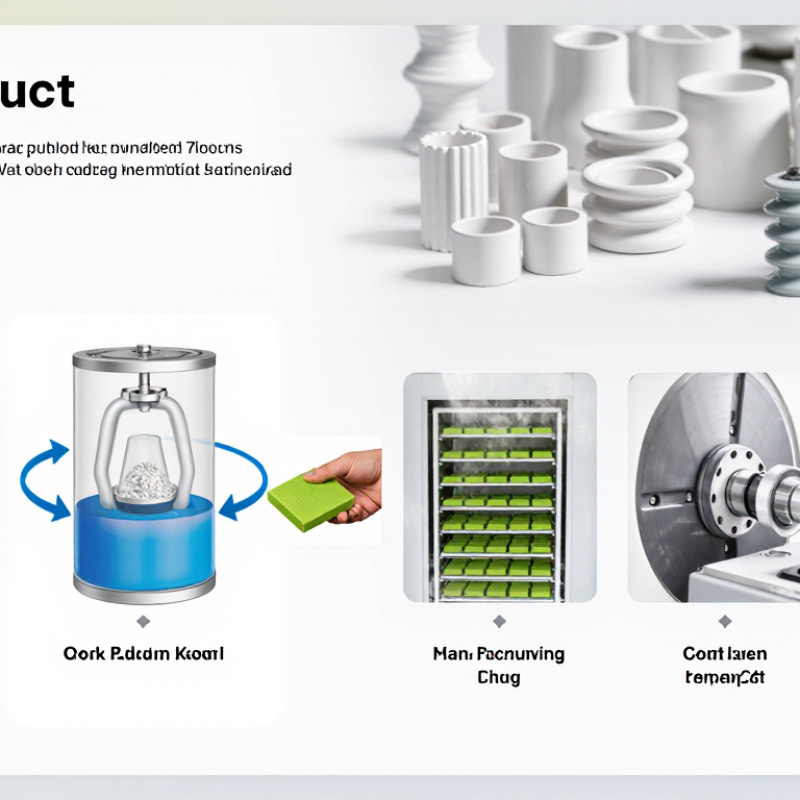
Isostatic pressing shapes ceramic powder by applying pressure evenly from every direction. Powder sits inside a flexible mold, which is placed in a sealed pressure vessel. A liquid transmits the pressure, helping compact complex shapes with fewer density differences than one-sided pressing. The result is a “green” part: firm enough to handle, but not yet fired.
That matters.
Cold isostatic pressing commonly operates around 100–400 MPa, though the suitable pressure depends on the powder, mold, and part geometry. The Engineered Materials Handbook, Volume 4: Ceramics and Glasses, describes isostatic compaction as a method for producing more uniform green bodies.
After pressing, parts still need drying or binder removal, then sintering at a material-specific temperature. Hot isostatic pressing adds heat and gas pressure, often to reduce internal porosity in already-sintered components. These methods are not interchangeable.
A thin-wall component may deform during handling, while trapped air or uneven powder filling can leave defects that pressure alone cannot fix.
Not quite.
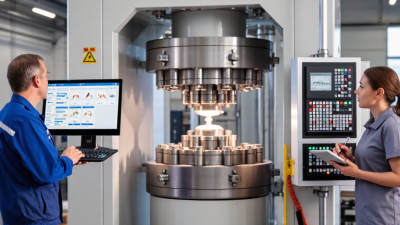
In production, operators check density, dimensions, and surface condition across sample parts; the pressure reading by itself does not prove consistent quality.
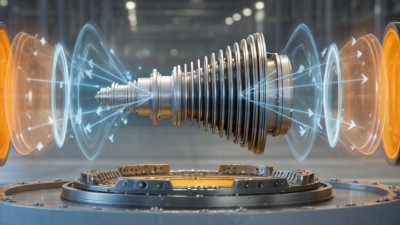
Isostatic pressing shapes ceramic powder by surrounding a sealed, flexible mold with fluid pressure. Unlike a rigid punch, pressure reaches the mold from every direction, compacting powder into a dense “green” body before firing. The European Powder Metallurgy Association’s technical guidance places common cold-isostatic pressing pressures around 200–400 MPa; ceramic formulations and part geometry can require different settings. That is an enormous load. Yet its main value is more even compaction, not pressure alone.
As the powder settles, particle contacts increase and large voids shrink. A technician can see the difference in a cut green compact: fewer obvious density bands than in poorly controlled one-direction pressing. Uniformity still depends on powder granule size, moisture, mold filling, and trapped air. Small flaws matter. Agglomerates may survive pressing and become pores after sintering. Technical references on ceramic processing, including Rahaman’s Ceramic Processing and Sintering, describe these links between green density, defects, and final properties. Isostatic pressure cannot repair bad powder preparation. It can also leave a part that needs careful drying or machining. The process is powerful, but not automatic; real production often requires trials, and that part is easy to underestimate.
Isostatic pressing forms ceramic parts by applying pressure evenly around powder inside a flexible mold. It can help produce consistent density and reduce directional differences. But the result still depends on careful powder preparation.
The process begins with blending and conditioning the ceramic powder. Operators fill a flexible mold, seal it, and check for trapped air or uneven packing. The mold enters a pressure vessel, where fluid pressure compresses it from all sides. Pressure is held, then released gradually. The compact is removed and checked for cracks, warping, and size variation. This unfired part is called a green compact. It may need machining before firing, which strengthens and densifies the ceramic. Warm and hot isostatic methods use added heat and require process conditions suited to the material.
Tips: Keep powder moisture and fill mass consistent. Record pressure, hold time, and release rate. A small trial run can reveal problems that routine checks miss. Don’t skip it.
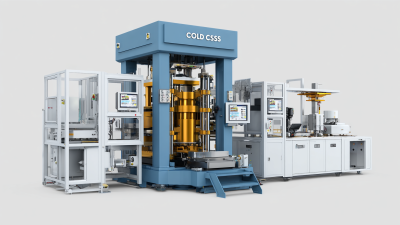
Cold isostatic pressing (CIP) uses a sealed, flexible mold inside a liquid-filled pressure vessel. Fluid applies pressure evenly, compacting ceramic powder into a green body. Typical CIP pressures fall around 100–400 MPa, though the required level depends on powder and part geometry (ASM Handbook, Volume 7). The equipment includes a high-pressure pump, vessel, mold, and controls. A long, narrow part may compact more uniformly than in a rigid die, but mold loading still matters. Small packing differences can become visible after firing.
Warm isostatic pressing (WIP) adds controlled heat to the pressure medium and vessel, helping some powders compact at lower temperatures than hot pressing.
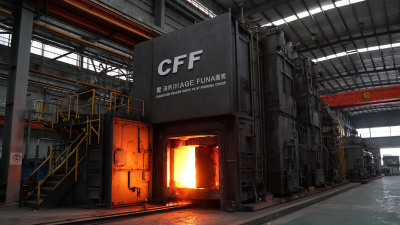
Hot isostatic pressing (HIP) uses a heated pressure vessel, usually with inert gas, to densify ceramic parts; technical references describe typical pressures near 100–200 MPa, alongside temperatures that may exceed 1,000°C (ASM Handbook, Volume 7). Equipment is more complex: it needs a pressure vessel, heating system, gas controls, and temperature monitoring. HIP can close internal pores, but it is not a cure for every flaw. One detail is easy to overlook: cycle time and tooling costs can outweigh gains for simple shapes.
Isostatic pressing applies fluid pressure to ceramic powder inside a flexible mold. Pressure comes from every direction. Unlike rigid-die pressing, it can compact parts with fewer density differences between the center and edges. In cold isostatic pressing, the compact is removed and fired in a kiln; it is not yet a finished ceramic part. Careful powder preparation still matters.
The method suits long rods, tubes, large blanks, and shapes that are awkward to press with a single punch. It is used for technical ceramics and refractory components where consistent density can reduce cracking during firing. Fewer density gradients may also mean less corrective machining. No rigid punch faces. For a plant handling varied part sizes, that flexibility can be valuable, though cycle times and mold handling need attention.
There are limitations. Flexible molds may produce less precise dimensions than hard tooling, so machining or careful process adjustment can still be necessary. Equipment and tooling costs can be significant, and green compacts are fragile before firing. Isostatic pressure does not fix poor powder flow, contamination, or uneven moisture. It is tempting to treat uniform pressure as a guarantee of uniform parts, but that assumption needs testing with actual batches and firing conditions.