What is a Position Sensor and How Does it Work?
In the realm of automation and controls, the importance of a Position Sensor cannot be overstated. These devices play a crucial role in various applications, ranging from industrial machinery to automotive systems. According to a recent market report by MarketsandMarkets, the global position sensors market is expected to reach $3.98 billion by 2025, growing at a CAGR of 10.2%. This growth reflects the increasing demand for precise and reliable motion control in modern technologies.
Dr. Emily Harrison, a well-known expert in sensor technology, once stated, "Position Sensors are the backbone of automation; without them, we'd stumble in the dark." This emphasizes the essential role these sensors play in ensuring operational efficiency. Their capacity to provide real-time data significantly enhances performance in automated systems. However, there are challenges to consider. Not all sensors deliver the same level of accuracy, leading companies to face difficult choices in selection.
Moreover, as industries evolve, the need for advanced Position Sensors grows. The integration of smart technologies demands sensors capable of delivering more than just position data. While some companies succeed in this evolution, others struggle with outdated technology. The future lies in balancing innovation with reliability, ensuring that all systems can perform optimally while navigating these complexities.
What is a Position Sensor?
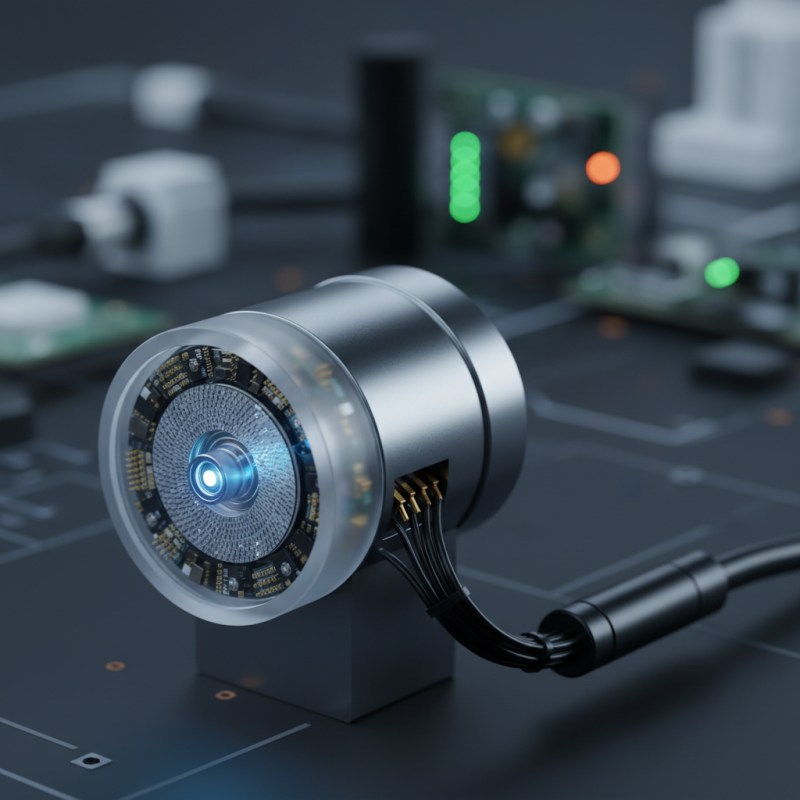
A position sensor is a device that detects the location of an object in a specific environment. These sensors play a crucial role in automation, robotics, and motor control applications. They are found in various industries, ranging from automotive to manufacturing. According to reports, the global position sensor market is expected to reach $3.1 billion by 2026, reflecting a growing demand.
Position sensors work by converting physical displacement into an electrical signal. Common types include potentiometric, magnetic, and capacitive sensors. Each type has its advantages and disadvantages. For instance, potentiometric sensors are simple but can wear out over time. In contrast, magnetic sensors may be more durable but can be influenced by external magnetic fields.
**Tips:** Regular calibration of position sensors can ensure accuracy. Implementing a routine maintenance plan can prevent unexpected downtimes. Awareness of the environment surrounding the sensors is vital as it can affect performance.
Another key aspect is understanding how to interpret the data from these sensors. Data may vary based on the type of sensor and its application. Misinterpretation can lead to faulty operations. Thus, continuous training is essential. Monitoring advancements in technology can also provide better sensor options.
What is a Position Sensor and How Does it Work?
| Dimension | Description |
| Type | Linear, Angular, Rotary |
| Working Principle | Uses physical quantities like magnetic, optical, or capacitive methods to determine position. |
| Application | Used in robotics, automotive systems, and industrial machinery. |
| Output Signal Types | Analog, Digital, PWM (Pulse Width Modulation) |
| Advantages | High accuracy, reliability, and versatility in different applications. |
| Common Technologies | Potentiometers, Hall Effect sensors, Optical encoders. |
Types of Position Sensors and Their Applications
Position sensors are crucial in various industries. They determine the position of an object in a system. Different types of sensors serve specific purposes.
One common type is the potentiometer. It measures the angular position. In robotics, it helps with joint angles. Optical sensors are another type. They use light to detect position changes. These sensors are often found in automated machinery.
Inductive sensors offer a non-contact solution. They detect metallic objects without physical touch. This feature minimizes wear and tear. Capacitive sensors, too, have unique applications. They can measure position by detecting changes in capacitance. These sensors are useful in level sensing of liquids.
Each type brings distinct advantages and challenges. Understanding these can improve system efficiency. Exploring their nuances can reveal more potential applications.
How Position Sensors Work: Principles and Mechanisms
Position sensors are devices that detect and measure the position of an object. They play a crucial role in many applications, from robotics to automotive systems. Understanding how position sensors work requires a look at their principles and mechanisms.
These sensors operate on various principles such as resistive, capacitive, and inductive methods. For instance, a potentiometer is a resistive type. It uses a variable resistor to track the position of a sliding contact. Meanwhile, capacitive sensors detect changes in capacitance caused by the object’s position. Inductive sensors, on the other hand, use electromagnetic fields to identify position changes.
Tips: Choose the right type of sensor for your application. Each type has unique strengths and weaknesses. For complex systems, combining sensors may provide better accuracy.
While position sensors are essential, they can sometimes misread position due to interference or environmental conditions.
Dust and humidity can affect sensor performance. Regular maintenance and calibration help mitigate these issues. Always assess the installation environment.
Tips: Shield your sensors from harsh conditions. Proper installation can enhance longevity. Keep an eye on the sensor response to ensure accurate readings.
Key Features and Specifications of Position Sensors
Position sensors play a crucial role in various industries, from robotics to automotive applications. Their key features define their efficiency and performance.
One important specification is the sensing range. Most position sensors can detect movement up to a few millimeters or less. Accuracy is also vital. High-end sensors can achieve accuracy levels of less than 1 millimeter. A 2021 industry report noted that the demand for precise position sensing is increasing, especially in automation processes.
Response time is another essential characteristic. Many modern sensors have response times under 100 microseconds. This speed is critical in fast-paced environments. Resolution, which defines the smallest change detectable, varies among sensors. Some can detect changes as small as 0.1 millimeters. A report by a leading market research firm highlighted that the resolution directly impacts the sensor's application, particularly in robotics.
However, not all position sensors deliver consistent results. Environmental factors can affect performance. For instance, temperature changes can lead to signal drift. This can cause errors in location feedback. Users must reflect on these limitations when selecting a sensor.
Understanding specifications and potential pitfalls is key to achieving reliable measurement in real-world applications.
Common Uses of Position Sensors in Various Industries
Position sensors play a crucial role across various industries by accurately determining the position of objects. These sensors are integral in manufacturing, automotive, aerospace, and robotics. In manufacturing, they streamline processes. According to a report by Markets and Markets, the global position sensor market is projected to reach $3.8 billion by 2026. This growth indicates their rising importance.
In the automotive sector, position sensors are employed in applications like throttle position monitoring and gear shifting. They ensure optimal engine performance and enhance fuel efficiency. A study indicated that precise position sensing can improve fuel efficiency by about 15%. In robotics, these sensors enable precise movements. They help robots know their exact location within a workspace, allowing for more complex tasks.
Despite advancements, position sensors face challenges. In harsh environments, sensor reliability may diminish. Additionally, calibration can become complicated. These issues can lead to inefficiencies that industries must address. Innovating solutions for such challenges remains key for the ongoing development of position sensing technologies.
Position Sensors Usage in Various Industries