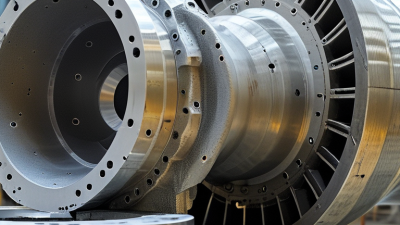
Choosing a Hip Hot Isostatic Pressing supplier is a decision about more than vessel size or hourly price. The supplier’s temperature uniformity, pressure control, cycle records, and inspection practices can shape the final part. A turbine component, for example, may need reliable densification across thick and thin sections. Small process differences matter.
Dr. Randall M. German is a recognized powder metallurgy expert. Rather than inventing a verbatim quotation, this guide uses a clearly labeled paraphrase of the practical principle his field emphasizes: “Trust measurable process control and material evidence, not equipment claims alone.” That distinction matters. Ask suppliers how they qualify cycles, monitor furnace conditions, and document each batch. Request examples relevant to your alloy, geometry, and acceptance criteria. A polished brochure is not proof.
These seven tips will help you compare technical capability, quality systems, communication, and total cost. Look for specific answers, not reassuring generalities. Ask who reviews process deviations and how the supplier protects traceability from incoming material to finished parts. Then examine the records. They can reveal gaps.
No checklist can replace a technical review of your component and process requirements. Supplier selection is rarely perfect on paper. A careful conversation, supported by records and a realistic trial plan, can expose assumptions before they become expensive surprises.

Before comparing HIP suppliers, define the job in measurable terms: alloy, part dimensions, starting porosity, target density, and downstream use. Separate critical requirements from preferences. For example, specify whether the part needs pore closure, diffusion bonding, or improved fatigue performance. Wohlers Associates’ 2024 report estimated global additive-manufacturing revenue at $20.0 billion in 2023. Its reported 11.1% annual growth signals a larger qualification burden, not proof that every part needs HIP.
Tip: Send suppliers the material specification, drawing, maximum load size, and acceptance criteria. Ask them to confirm temperature, pressure, hold time, and traceability. TWI’s technical guidance places common HIP pressures around 100–200 MPa; treat this as a planning range, not a recipe. Request trial coupons or representative parts.
Record baseline and post-HIP results, such as density, CT inspection, hardness, or tensile data. Name the test method, sampling locations, and acceptable variation. A specification can still miss the real risk: thin walls may distort, while thick sections respond differently. Review fixture support and cooling plans, too. Small details matter.
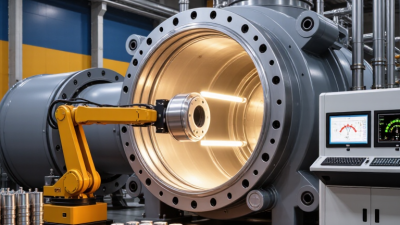
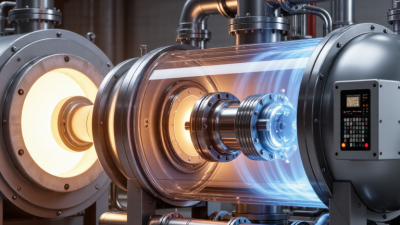
Choosing a HIP supplier starts with the equipment, not the brochure. Ask for the vessel’s usable hot-zone dimensions, maximum operating temperature and pressure, and typical loading limits. A large chamber may still have a smaller uniform-temperature zone. Request calibration records and a sample cycle report showing pressure, temperature, hold time, and any deviations. Check how loads are positioned and batches are traced. Small details matter.
Then assess technical expertise and process range. Ask which alloys or ceramic grades the team routinely handles, what part sizes fit, and where its experience ends. Can engineers explain how a proposed cycle addresses porosity or dimensional change? Request an anonymized case example or a trial run using representative material. Review how results are inspected and documented, not just whether the part passed. Even a capable supplier may not have a ready answer for every geometry. That hesitation is worth discussing openly. Compare the supplier’s proven operating window with your actual part and quality requirements, rather than relying on a broad claim of capability.
A capable HIP supplier should show how its quality system controls each step, not merely display a certificate. Check that the certificate is current, covers the actual production site, and matches the parts and services you need. ISO’s 2022 Survey of Certifications recorded 1,265,216 ISO 9001 certificates worldwide. That figure shows how widely quality systems are used; it does not prove a supplier can consistently control HIP cycles. Ask for procedure revisions, operator training records, and examples of corrective actions. Ask for evidence.
Inspection details matter. Review how the supplier calibrates pressure and temperature instruments, verifies furnace uniformity, and records each load’s time, temperature, and pressure. Confirm that material identity stays traceable from receipt through processing and final inspection. Ask which non-destructive tests are available, who performs them, and how results link to your part number and HIP batch. A sample traveler can reveal more than a sales presentation. Look for clear acceptance criteria and retained records, not just a list of equipment.
A strong audit also tests what happens when results fall outside limits. Request a redacted nonconformance example and follow its investigation through disposition and corrective action. Even a mature system can miss a detail; the response matters. I would not treat a clean audit as proof of zero risk. Compare documented procedures with actual shop-floor records, and check that inspection methods fit the material, geometry, and required defect sensitivity.
| Tip | Evaluation Area | What to Verify | Useful Evidence or Questions |
|---|---|---|---|
| 1 | Check the quality management system | Confirm that documented procedures cover contract review, process control, nonconformance handling, corrective action, document control, and record retention. | Request the current quality-system certificate and its scope, then confirm that the listed activities and site are relevant to the work. ISO 9001 is a general quality-management standard; certification alone does not demonstrate that a specific HIP process meets your requirements. |
| 2 | Verify applicable industry approvals | Determine whether the end-use sector, customer, or contract requires additional approvals or special-process accreditation. | Ask for approval scope, covered site and process, and any customer-specific requirements. Nadcap accreditation may be relevant to aerospace special processes when required by the customer, but it is not a universal requirement for every HIP application. |
| 3 | Review process capability and controls | Check how the supplier controls and records the qualified HIP cycle, including temperature, pressure, hold time, loading arrangement, and applicable atmosphere or gas controls. | Ask for an example of a cycle record and the method used to verify instrument calibration and process equipment status. Confirm that the proposed process window is appropriate for the material, component geometry, and purchase specification. |
| 4 | Assess material and lot traceability | Verify that incoming material, components, HIP loads, and final records can be linked through unique identifiers without losing part or batch identity. | Ask how the supplier records material condition, load location where relevant, processing dates, and any permitted reprocessing. Review a sample traceability package and confirm that records can be retrieved for the required retention period. |
| 5 | Match inspection methods to the part | Confirm that inspection is selected according to the material, geometry, defect type, acceptance criteria, and applicable specification. | Discuss dimensional inspection, radiographic or ultrasonic examination where suitable, and destructive testing such as metallography or mechanical testing when specified. Ask which methods are performed in-house and which are subcontracted, and how subcontracted results are controlled. |
| 6 | Check inspection personnel and laboratory competence | Review personnel qualification for the inspection methods used and the competence of any testing laboratory providing results. | For laboratory testing, ask whether the relevant tests fall within an ISO/IEC 17025-accredited scope when such accreditation is required or appropriate. For nondestructive testing, verify personnel qualifications against the contractually applicable scheme and method-specific requirements. |
| 7 | Evaluate reporting and corrective-action practices | Ensure the final documentation clearly reports the work performed, acceptance status, deviations, inspection results, and applicable process records. | Request a sample report with sensitive information removed. Ask how out-of-specification results, customer notifications, concessions, and corrective actions are documented, approved, and linked to the affected parts or lots. |
When comparing HIP suppliers, look beyond advertised furnace size. Ask for usable hot-zone dimensions, maximum load weight, and typical batch configuration. A large chamber may still be inefficient if your parts require wide spacing or custom fixtures. Request a capacity plan based on your part drawings and expected annual volume. Include ramp-up orders, not only steady production.
Break lead times into clear stages: engineering review, fixture design, first article, production slot, and dispatch. Ask for recent delivery ranges rather than one optimistic date. For example, clarify how long it usually takes to schedule a cycle after parts and specifications are approved. Check whether maintenance, inspection, or queue changes affect the estimate. Dates can move. That happens.
Delivery reliability depends on communication as well as furnace availability. Ask for on-time delivery records, typical responses to nonconformances, and a clear process for schedule changes. Batch reports should link each load to its temperature, pressure, and cycle record. Also check protective packaging and the carrier handoff plan; delicate components can arrive damaged despite sound processing. A small qualification batch with written milestones can reveal weak points. It may take extra time. Ask for evidence, not promises.
A HIP quote can look simple until production begins. Compare more than the price per cycle: include tooling, loading, inspection, packaging, freight, and possible repeat runs. Ask suppliers to price a representative part, with its material, dimensions, and acceptance criteria. Request assumptions in writing. A low quote may exclude useful details, and I have seen buyers notice that too late.
Communication is part of process control. Ask who reviews your drawings, how deviations are reported, and when you receive temperature, pressure, and cycle records. Try a technical question before signing; note how clearly the supplier responds. McKinsey’s 2018 report on predictive maintenance estimates maintenance-cost reductions of 10–40% and downtime reductions of 30–50%. These are broad manufacturing estimates, not HIP-specific promises, but they show why responsive service matters. Ask how the supplier tracks equipment condition and handles an unexpected interruption.
Long-term support should cover spare parts, calibration, operator training, troubleshooting, and future capacity needs. Confirm response targets, service availability, and record-retention practices. Ask for a sample run report, not just a polished presentation. I would not treat friendly communication as proof of technical depth; that is an easy mistake. Yet a technically capable supplier who cannot explain problems plainly may still be difficult to work with. Judge both.
Compare suppliers across cost, process fit, quality, communication, delivery, technical support, and long-term service.
These percentages are suggested decision weights, not published market statistics. Adjust them to match your part requirements, production volume, and support needs; assess total cost over the equipment or service lifecycle rather than purchase price alone.