Why Choose Hip Isostatic Pressing for Global Sourcing?
Why Choose Hip Isostatic Pressing for Global Sourcing? The answer begins with material reliability, not marketing language. Hip Isostatic Pressing uses high temperature and uniform gas pressure to compress internal pores throughout a component. Imagine a turbine part emerging with fewer voids, stronger fatigue resistance, and more consistent density.
Dr. Michael Gasik, a recognized materials-processing researcher, describes the principle clearly: “HIP is not a magic repair step; it is a controlled densification process.” That distinction matters. The process can improve castings, powder-metal parts, and additive-manufactured components. It cannot correct every design weakness. Details decide.
For global sourcing teams, this consistency can simplify supplier comparisons. A qualified supplier should provide temperature records, pressure curves, material certificates, and traceable batch information. These documents help engineers evaluate parts made in different countries. They also support repeatable qualification across facilities and production volumes.
The commercial benefits can be practical. Fewer rejected parts may reduce inspection waste and replacement delays. Better fatigue performance can extend service life in aerospace, energy, medical, and demanding industrial applications. However, Hip Isostatic Pressing adds cost, lead time, and process planning. It is not automatically the cheapest option. A lower unit price may hide machining losses or premature failures.
Global buyers should review alloy compatibility, dimensional changes, post-HIP heat treatment, and applicable standards before placing orders. Supplier experience matters, but independent testing still matters more. The process is powerful, not perfect. A careful sourcing strategy combines technical evidence, transparent communication, and realistic expectations.
What Is Hip Isostatic Pressing and How Does It Work?
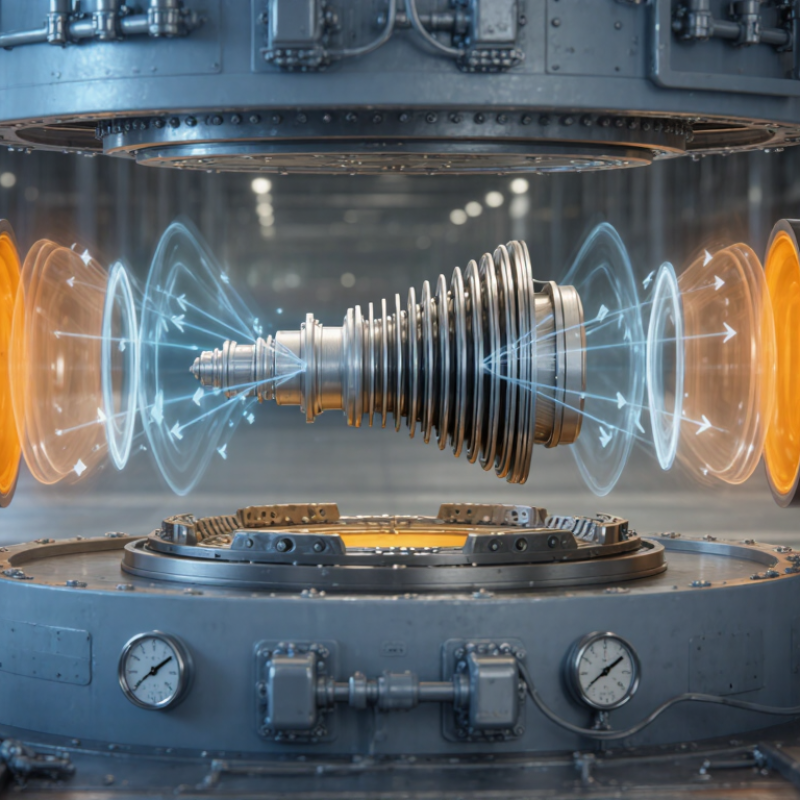
Hot isostatic pressing, or HIP, is a controlled process for improving metal and ceramic components. It combines high temperature with uniform gas pressure inside a sealed vessel. Usually, argon surrounds the component from every direction. No mold pushes from one side.
Under heat, internal pores become smaller. Pressure then helps close them. The material becomes denser and more consistent. In metal parts, this can improve fatigue resistance, toughness, and dimensional reliability. The process may also bond powder, reduce internal defects, or strengthen complex castings. That assumption deserves scrutiny. Results depend on material grade, design, and process control.
A sourcing engineer should ask for more than a polished certificate. Review the HIP cycle, furnace calibration, traceability records, and inspection method. Ultrasonic testing can reveal hidden discontinuities after processing. In practice, clear process records often matter as much as final test results.
HIP is not a magic fix. It cannot correct poor design, contamination, or careless machining. It may also change dimensions slightly, so allowances should be planned before production. Cycle time and energy use can raise costs. Yet, for critical components sourced across borders, improved internal quality can reduce rejection, rework, and uncertain field performance. Results still depend on qualified operators and honest verification.
Why Choose HIP Isostatic Pressing for Global Sourcing?
HIP applies high-temperature gas pressure uniformly from all directions, helping close internal porosity and improve material consistency. The chart shows representative midpoint values from commonly used HIP process windows for major alloy families.
Typical HIP conditions vary by alloy, part geometry, and required properties. Common industrial HIP pressures are approximately 100–200 MPa, while temperatures are selected below the material’s melting point to support densification without damaging the component.
Which Material and Product Challenges Can HIP Solve?
Why Choose Hip Isostatic Pressing for Global Sourcing?
Hot Isostatic Pressing, or HIP, addresses defects that ordinary machining cannot see. It uses high temperature and uniform gas pressure to close internal pores and shrinkage cavities. This matters when sourcing cast titanium, nickel alloys, stainless steel, aluminum, or metal powder components across borders. A part may look perfect outside while hidden voids weaken it under vibration, heat, or repeated loading.
HIP can improve fatigue performance in turbine components, medical instruments, pressure-bearing parts, and complex additive-manufactured shapes. It can also consolidate metal powders and reduce differences between production batches. For global programs, that consistency supports clearer inspection plans and more reliable qualification data. Experienced suppliers should provide batch records, furnace details, material certificates, dimensional reports, and mechanical test results. Independent inspection may still be appropriate.
HIP is not magic. It cannot remove every inclusion, repair poor alloy selection, or correct an unsuitable design. Some parts may change slightly in size or shape during processing. That can affect machining allowances and delivery costs. A small but important caveat. Engineers should confirm density, tensile strength, fatigue behavior, and final dimensions after treatment. Computed tomography can reveal remaining defects, but it adds time and expense. In practice, HIP works best when material history, process control, and inspection are planned together, rather than added after a sourcing problem appears.
How Does HIP Improve Quality, Density, and Performance?
Why Choose Hip Isostatic Pressing for Global Sourcing?
How Does HIP Improve Quality, Density, and Performance?
Hot isostatic pressing, or HIP, applies high temperature and uniform gas pressure around a component. This action closes internal pores and bonds weak interfaces without directional loading. Industry data commonly reports final densities above 99.9% of theoretical density for suitable alloys. ASTM B962 and ISO 2738 provide recognized methods for verifying density and residual porosity.
The improvement is visible in CT scans. Tiny dark voids become fewer, while machined surfaces show more consistent structure. A 2023 review in Materials & Design linked HIP treatment with reduced fatigue crack initiation in additively manufactured metal parts. Its value is practical: fewer leak paths, stronger fatigue performance, and more predictable machining behavior. For global sourcing, suppliers can ship complex parts with tighter quality evidence. Process records should include temperature, pressure, hold time, powder or billet traceability, and inspection results.
HIP is not magic. Poor alloy selection, contamination, or unsuitable cycle settings can still produce failures. The 2024 Wohlers Report also highlights the growing need for standardized qualification in advanced manufacturing. Buyers should request density measurements, ultrasonic or computed-tomography inspection, and mechanical test data from representative batches. One overlooked detail matters: a dense part may still distort during later heat treatment. Small pilot lots often reveal this risk before full production.
What Should Global Buyers Consider When Choosing HIP Suppliers?
Why Choose Hip Isostatic Pressing for Global Sourcing?
When global buyers choose hip isostatic pressing (HIP), supplier selection matters as much as the pressure vessel. HIP can reduce internal porosity and improve consistency in complex metal parts. However, results depend on cycle design, powder or casting quality, and post-processing control. Ask which materials the supplier routinely handles, not only what its brochure lists. Request sample heat maps, density data, and dimensional results from comparable parts. Real evidence is more useful than broad capability claims.
A dependable supplier should explain qualification steps clearly. These may include furnace calibration, load mapping, non-destructive testing, and metallographic review. Confirm whether records are traceable to heat, batch, operator, and equipment. Check relevant quality certifications, but do not treat certificates as the whole audit. A site visit can reveal practical details, such as clean storage, labeled containers, and disciplined document control. Small signs matter.
Global sourcing also requires realistic capacity and communication. Ask about typical lead times, minimum batch sizes, surge capacity, packaging, and export documentation. Clarify who owns deviations when density or dimensions miss the agreed range. Written acceptance criteria prevent expensive misunderstandings. I have learned that fast replies do not always mean strong engineering support. Technical questions should reach a qualified engineer, not disappear into sales language. A polished website can still hide weak process control. Compare measured performance, risk controls, and transparency before approving the first production order.
How Can Companies Evaluate HIP Costs, Standards, and Supply Risks?
Why Choose Hip Isostatic Pressing for Global Sourcing?
How Can Companies Evaluate HIP Costs, Standards, and Supply Risks?
Evaluating hot isostatic pressing costs requires more than comparing hourly furnace rates.
Ask for a complete quotation covering powder, tooling, encapsulation, heat treatment, machining, inspection, packaging, and freight. A small titanium component may need expensive capsule removal and post-HIP machining. Batch size also matters. Larger loads can reduce unit costs, but only when the furnace cycle matches production volumes.
Standards should be checked against the part’s service environment.
Review material certificates, furnace calibration records, temperature uniformity data, and pressure-cycle logs. Require traceability from powder lot to finished component. Non-destructive testing may include ultrasonic inspection, computed tomography, or dye penetrant testing. The required method depends on geometry and risk. A supplier should explain acceptance criteria clearly, not simply list certifications. A familiar certificate is not proof of suitable process control.
Supply risk deserves equal attention.
Audit the facility, confirm backup equipment, and ask how maintenance affects delivery dates. Check whether one subcontractor performs machining or inspection. Request recent on-time delivery data, realistic lead times, and a documented recovery plan. Two qualified sources may still share the same powder or furnace dependency. That hidden link matters. Cost models can be wrong when energy prices, shipping delays, or rework increase unexpectedly. I would challenge unusually low quotes. They may exclude inspection, scrap, or engineering support. Leave room for pilot lots and technical disagreements. Reliability is measured before a crisis, not during one.