Why Choose Hot Isostatic Pressing Services?
Hot Isostatic Pressing Services help manufacturers produce denser, more reliable metal components under controlled heat and pressure. The process surrounds a component with inert gas, often argon, inside a sealed pressure vessel. This environment can close internal pores, reduce micro-shrinkage, and improve fatigue performance. Think of a turbine part emerging with fewer hidden weaknesses.
Industry data supports growing interest in advanced manufacturing. The Wohlers Report 2024 valued the global additive manufacturing industry at approximately $20 billion in 2023, with continued demand from aerospace, medical, energy, and automotive sectors. Its findings also emphasize post-processing as a critical stage for improving printed-part quality. That point matters because additive manufacturing does not end when the build plate cools. It often begins there.
Market reports differ in their forecasts, which deserves caution. Grand View Research projects strong growth for metal additive manufacturing through the decade, while other analysts use narrower market definitions. These differences can affect purchasing decisions. Reliable suppliers should therefore provide traceable furnace records, material certificates, dimensional results, and recognized quality controls, such as ISO 9001 or Nadcap approval where applicable. Ask for evidence.
From practical experience, HIP is not automatically the best answer for every component. Geometry, alloy selection, surface condition, pressure cycle, and inspection requirements all influence results. A qualified provider should review these details before quoting. The strongest Hot Isostatic Pressing Services combine metallurgical expertise with repeatable process control. They can help reduce scrap, support demanding certification needs, and extend component life, although savings must be proven through real production data. No process is perfect. That is why verification remains essential.
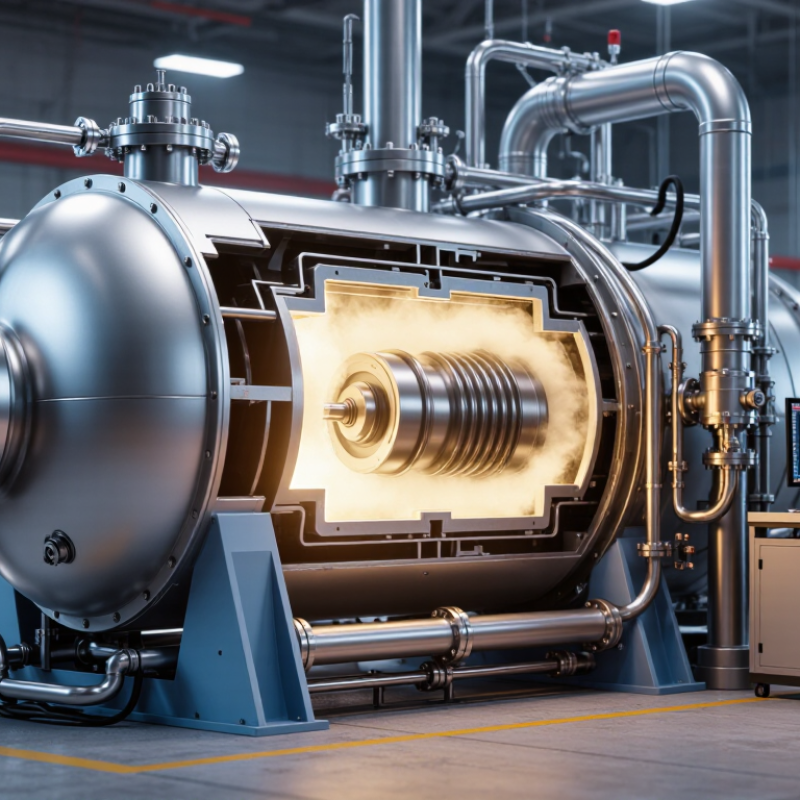
Hot Isostatic Pressing, or HIP, is a thermal manufacturing process that uses high temperature and uniform gas pressure. The pressure usually comes from an inert gas, often argon. It surrounds a component from every direction.
During treatment, internal pores and tiny cracks can close. The material becomes denser and more consistent. This process is useful for castings, powder-metal parts, and complex components with hidden defects. A controlled heating cycle supports diffusion between material particles. The result can include improved fatigue strength, ductility, and dimensional reliability.
HIP is not a magic fix. Poorly designed parts may still fail. Processing parameters must match the alloy, geometry, and required performance. Experienced engineers review material certificates, heating profiles, pressure records, and inspection results. They may also use non-destructive testing before and after treatment. That evidence helps confirm whether the process achieved its purpose.
Tips: Define acceptance criteria before production begins. Check the part’s dimensions after HIP, especially around thin walls and precision features. Keep a complete process record. Small details matter. Also, ask whether the provider has experience with your material and application. A careful review may reveal that HIP is unnecessary, or that another treatment better fits the design.
Why Choose Hot Isostatic Pressing Services?
How the HIP Process Works
Hot Isostatic Pressing, or HIP, uses heat and high gas pressure to improve metal components from every direction. The part sits inside a sealed pressure vessel filled with an inert gas, usually argon. It is not squeezed by a single tool. Pressure surrounds the component evenly.
During the cycle, temperature rises close to the material’s working range. Gas pressure may reach hundreds of megapascals. Internal pores and tiny voids gradually collapse under this combined force. Atoms move across weakened boundaries, helping the structure become denser and more uniform. The exact cycle depends on the alloy, part geometry, and required properties.
Small details matter. A technician must control heating speed, holding time, pressure changes, and cooling conditions. A flawed temperature record can affect strength or dimensional stability. The process is powerful, not perfect. Some defects remain if they are too large, connected to the surface, or formed during poor casting. That is why reliable services include material review, parameter development, and inspection before and after treatment.
HIP can improve fatigue resistance, ductility, and consistency in demanding parts. It may also reduce variation between production batches. However, it does not replace sound design or careful manufacturing. Engineers still need to examine distortion risks, machining allowances, and final testing requirements. Careful evaluation makes the process more useful than simply applying pressure and heat.
Hot Isostatic Pressing (HIP) uses high-temperature, high-pressure inert gas to eliminate internal pores and improve the consistency of metal components.
The chart shows representative HIP temperature setpoints commonly used for different material families. Actual cycles are adjusted to the alloy composition, component geometry, required density, and furnace specifications.
Components are placed in a sealed pressure vessel and surrounded by inert argon gas. The vessel is heated while pressure is increased, typically within the 100–200 MPa range. Sustained temperature and pressure cause plastic deformation and diffusion, closing internal voids. The parts are then cooled under controlled conditions before inspection or additional heat treatment.
Why Choose Hot Isostatic Pressing Services?
Key Benefits of HIP Services
Hot Isostatic Pressing (HIP) applies high temperature and gas pressure evenly around a component. This treatment closes internal pores, bonds interfaces, and improves material consistency. A 2024 Wohlers Report recorded a 13.5% growth in the global additive manufacturing industry during 2023. More complex metal parts are entering production, increasing the need for reliable post-processing. HIP can be especially valuable for aerospace, medical, energy, and tooling components with demanding safety requirements.
The benefits are practical. HIP can raise fatigue strength, improve ductility, and reduce leak paths inside cast or printed parts. It also supports more predictable machining because hidden voids are less likely to open during cutting. Materials engineers typically review temperature, pressure, hold time, and cooling rates together. Small changes matter. ASTM International guidance and published metallurgical studies emphasize that process qualification must match the alloy and application.
However, HIP is not a universal repair method. It cannot correct poor chemistry, severe surface defects, or incorrect dimensions. Results also depend on inspection before and after treatment. Non-destructive testing, density measurements, and mechanical testing provide stronger evidence than visual appearance alone. In practice, some components still require heat treatment or machining afterward. That added cost deserves honest evaluation. The best HIP program balances defect reduction, performance data, production volume, and the consequences of failure.
Hot Isostatic Pressing suits materials that must survive pressure, heat, and repeated loading. Titanium alloys, nickel-based superalloys, stainless steels, aluminum alloys, tool steels, ceramics, and cemented carbides are common candidates. HIP applies high-pressure inert gas and controlled heat, closing internal pores without melting the component. A dense turbine blade, for example, can leave the vessel with fewer voids around thin cooling passages.
Aerospace remains a strong application because small defects can become serious fatigue failures. The 2024 Wohlers Report valued global additive manufacturing revenue at approximately $20.0 billion in 2023, with 23.5% growth. That expansion increases demand for HIP after metal powder-bed production. Medical manufacturing also benefits. Hip implants, spinal parts, and surgical instruments need consistent density and traceable processing. Energy equipment uses HIP for valves, pump bodies, and high-temperature components exposed to corrosive fluids.
The process is powerful, but not flawless. A careless cycle can distort a delicate geometry or hide poor powder handling. Tool steels and nickel alloys may require different temperature windows, while ceramics demand tighter control. Practical qualification should include density checks, metallography, tensile testing, and fatigue evaluation. ASTM standards provide useful guidance, yet every alloy and geometry behaves differently. That judgment remains the difficult part.
| Material or Component Category | Typical HIP Purpose | Key Benefits | Industries Commonly Served | Important Considerations |
|---|---|---|---|---|
| Titanium and titanium alloys | Close internal porosity in castings and consolidate powder-based components. | Improves fatigue performance, ductility, fracture resistance, and consistency. | Aerospace, medical, energy, and high-performance engineering. | Temperature and pressure cycles must match the alloy and component geometry. |
| Nickel-based superalloys | Eliminate casting defects and improve the integrity of high-temperature parts. | Enhances creep resistance, fatigue life, and reliability under thermal stress. | Aerospace propulsion, power generation, and industrial gas turbines. | HIP is often combined with heat treatment to achieve the required microstructure. |
| Aluminum alloys | Reduce porosity in cast or additively manufactured parts. | Can improve tensile properties, fatigue behavior, and dimensional reliability. | Aerospace, transportation, automotive, and lightweight structures. | The process must control distortion and avoid excessive grain growth. |
| Tool steels and high-speed steels | Densify powder-metallurgy materials and remove internal voids. | Improves toughness, wear resistance, polishability, and service life. | Tooling, mold making, metal forming, and industrial manufacturing. | Post-HIP heat treatment and machining allowances should be planned in advance. |
| Stainless steels | Close shrinkage cavities and improve the density of complex parts. | Supports better fatigue strength, corrosion performance, and structural integrity. | Chemical processing, food equipment, medical devices, and general engineering. | Surface condition and cleanliness remain important for corrosion-sensitive applications. |
| Cobalt-based alloys | Consolidate powder components and heal porosity in cast products. | Maintains strength, wear resistance, and corrosion resistance at elevated temperatures. | Medical, aerospace, energy, and wear-resistant component manufacturing. | HIP parameters should be selected to prevent undesirable phase changes. |
| Additively manufactured metal parts | Close lack-of-fusion defects and gas pores created during powder-bed or directed-energy processes. | Improves density, fatigue life, mechanical uniformity, and production yield. | Aerospace, medical implants, motorsport, energy, and advanced manufacturing. | HIP cannot correct every surface defect; inspection and appropriate heat treatment are still required. |
| Ceramics and cemented carbides | Densify selected ceramic or carbide materials and reduce internal defects. | Can improve hardness, strength, wear resistance, and reliability. | Cutting tools, wear parts, electronics, medical, and industrial applications. | Material compatibility, encapsulation, and thermal expansion differences require careful control. |
Selecting a hot isostatic pressing provider requires more than comparing furnace size or hourly rates. The 2024 Wohlers Report valued the global additive manufacturing industry at about $20 billion in 2023, with annual growth above 20%. That expansion increases demand for reliable post-processing. It also makes weak supplier controls easier to hide.
Ask how the provider validates temperature, pressure, heating rate, cooling rate, and atmosphere. Request recent process charts, calibration records, and material-specific qualification data. A capable facility should explain its cycle development method without vague promises. It should also support recognized standards, such as ASTM or ISO requirements, when your application demands them. Traceability matters. Every batch should connect to powder or billet records, furnace data, operator checks, and inspection results.
Review the testing plan before signing a purchase order. Density measurement alone may not reveal harmful pores or microstructural changes. Consider tensile testing, fatigue testing, hardness checks, metallography, or computed tomography. The 2023 International Energy Agency manufacturing analysis emphasizes efficiency and material utilization as major industrial priorities; HIP can support near-net-shape production, but only when the process is controlled. A low quote may become expensive after rework. That lesson is easy to overlook. Site audits, sample runs, and clear nonconformance procedures reduce this risk. Still, no provider is perfect. Ask how it investigates failures, shares uncomfortable findings, and improves future cycles.