Why Use the Hot Isostatic Pressing Process?

Why Use the Hot Isostatic Pressing Process?

Manufacturers use the Hot Isostatic Pressing Process to improve the internal quality of demanding components. It combines elevated temperature with uniform gas pressure. This pressure acts from every direction. Internal pores can shrink or close. Weak interfaces may also bond more effectively.

The result is often higher density, better fatigue performance, and more consistent mechanical properties. These benefits matter in aerospace, medical, energy, and precision engineering applications. A turbine component may contain hidden porosity after casting. Hot isostatic pressing can reduce that defect before final machining. The part then receives a more reliable foundation.

Control remains essential. Engineers must select suitable temperature, pressure, holding time, and cooling conditions. Material grade matters too. Titanium, nickel alloys, stainless steels, and tool steels may respond differently. Qualified operators review furnace records and inspect representative samples. Non-destructive testing can support this evaluation. Process validation should match the component’s risk and service conditions.

It is not magic.

The process cannot repair every design mistake. Excessive treatment may affect grain structure or dimensional accuracy. Distortion can also appear when geometry, material, and parameters are poorly matched. That point is easy to underestimate. Practical experience shows that successful results depend on more than equipment capability. They require metallurgical knowledge, traceable documentation, and realistic acceptance criteria. Cost and cycle time also deserve honest consideration. For simple, low-risk parts, another manufacturing route may be more efficient. A careful comparison reveals when this advanced process creates genuine value.
Why Use the Hot Isostatic Pressing Process?

What Is Hot Isostatic Pressing?

Hot Isostatic Pressing (HIP) is a thermal treatment that applies heat and uniform gas pressure to metal parts.

The pressure usually comes from argon, an inert gas. Unlike ordinary pressing, HIP compresses a component from every direction. Internal pores can close, while diffusion bonds surrounding material. The result is often higher density, stronger fatigue performance, and more consistent mechanical properties. ASTM International standards help define HIP practices and material testing. The 2024 Wohlers Report valued the global additive manufacturing industry at about $20.0 billion in 2023. This growth matters because many printed metal parts still require post-processing before demanding service.

Temperature and pressure depend on the alloy, geometry, and target properties. A titanium component may need a carefully controlled cycle near its beta-transus range. A nickel alloy requires different limits. Small defects can remain if surfaces contain cracks or contamination. HIP is not a magic eraser. Production engineers should review density scans, tensile results, and fatigue data together. One incomplete inspection can create false confidence. I would also compare parts before and after HIP, because dimensional changes may affect tight interfaces.

Tips: Record heating rates, pressure curves, hold times, and cooling conditions. Keep witness coupons beside production parts when possible. Check porosity using validated imaging methods, not visual inspection alone. The 2023 ASTM additive manufacturing standards landscape also emphasizes process control and repeatable qualification. That point deserves attention. Fancy equipment cannot replace disciplined records.

How the Hot Isostatic Pressing Process Works

Why Use the Hot Isostatic Pressing Process?

How the Hot Isostatic Pressing Process Works

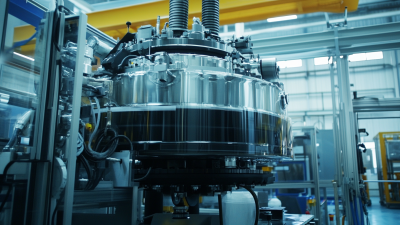
Hot Isostatic Pressing, or HIP, applies heat and uniform gas pressure to metal parts. The component sits inside a sealed furnace chamber. Inert argon surrounds it from every direction. Typical pressures range from 100 to 200 MPa. Temperatures depend on the alloy, often reaching 900–2,000°C.

Heat softens the metal without fully melting it. Pressure then squeezes internal pores and microcracks closed. Atomic diffusion bonds the surrounding material together. Properly designed cycles can produce densities above 99.9% of theoretical density. The result is better fatigue resistance and more stable mechanical performance. A turbine component may emerge with fewer hidden defects beneath its machined surface.

The 2024 Wohlers Report recorded $20.035 billion in global additive manufacturing revenue for 2023. That figure is not HIP-specific. Still, it reflects growing demand for dependable post-processing. HIP can also reduce distortion risks, but it is not magic. Poor powder quality or an unsuitable cycle remains a serious weakness.

Tips: Confirm alloy-specific temperature limits before production. Use witness coupons when possible. Record pressure, temperature, holding time, and cooling conditions. Inspect density and dimensions afterward. Real parts sometimes reveal flaws that process charts miss. That gap deserves attention.

How HIP Improves Material Density and Performance

Why Use the Hot Isostatic Pressing Process?

Hot Isostatic Pressing, or HIP, applies high temperature and uniform gas pressure around a component. The pressure acts from every direction. Internal pores collapse, while bonded surfaces become more continuous. ASM Handbook guidance reports that HIP can produce near-full density, often above 99.9% in suitable alloys. That small fraction matters. A hidden pore can become a crack during cyclic loading.

The 2024 Wohlers Report identifies post-processing as a critical stage in industrial additive manufacturing. HIP is widely used there to improve repeatability and mechanical performance. In practice, a porous metal part may show inconsistent fatigue life. After HIP, tensile strength, ductility, and fatigue resistance can become more stable. The result is not simply a heavier part. It is a more dependable material structure.

HIP also improves confidence in complex shapes. Turbine parts, medical components, and pressure hardware often contain narrow internal channels. Conventional inspection may miss isolated pores inside those areas. HIP cannot repair every defect. Poor powder quality, contamination, or incorrect parameters still create problems. That limitation deserves attention. A density figure alone can mislead. Engineers should compare pore distribution, microstructure, and test results before approving production. Standards such as ASTM F3303 support controlled qualification for additive manufacturing processes, but real performance still depends on alloy, temperature, pressure, and cooling conditions.

Which Materials and Components Benefit from HIP?

Why Use the Hot Isostatic Pressing Process?

Hot Isostatic Pressing, or HIP, benefits materials with hidden pores, weak interfaces, or inconsistent density. Heat and high-pressure gas act from every direction. This closes internal voids without crushing the component’s overall shape. Cast nickel-based alloys, titanium, aluminum, tool steels, and ceramics can respond well. Powder metallurgy parts also gain stronger and more uniform structures. Additively manufactured components are common HIP candidates. Their internal channels may contain tiny pores left by printing. The improvement is often measured through fatigue testing, tensile strength, and fracture inspection.

Critical components may include turbine parts, medical implants, pressure-containing hardware, and precision tooling. HIP can reduce crack initiation sites around inclusions or imperfect fusion zones. It does not repair every defect. Surface cracks, poor design, and severe contamination may remain. That limitation matters. A qualified engineer should review material chemistry, wall thickness, temperature limits, and expected dimensional change. Some parts require machining after HIP because edges can move slightly. Process qualification also needs traceable furnace records and independent inspection. A hurried cycle can produce disappointing results.

Tips: Match the HIP cycle to the alloy. Test representative samples, not only finished parts. Check density before and after treatment. Leave machining allowance where shrinkage may occur. Reconsider the process when the component has open cracks or unstable geometry. The best choice is sometimes no HIP at all.

Why Use the Hot Isostatic Pressing Process?

Which Materials and Components Benefit from HIP?

Hot Isostatic Pressing applies high temperature and uniform gas pressure to close internal pores, improve density, and enhance fatigue strength. The chart shows representative HIP temperature windows commonly used for major material classes. HIP is especially valuable for aerospace castings, additively manufactured parts, powder-metallurgy components, tool steels, and ceramic components. Actual parameters vary according to alloy composition, geometry, and required properties.

Key Process Factors, Advantages, and Limitations

Hot Isostatic Pressing, or HIP, combines heat and uniform gas pressure to densify metal, ceramic, or composite components. The pressure acts from every direction, closing internal pores and bonding weak interfaces. In practice, engineers monitor temperature, pressure, heating rate, holding time, and cooling conditions. Small changes can affect density, grain growth, and final dimensions. The chamber atmosphere must also remain controlled.

The main advantage is improved structural reliability. A dense component usually shows better fatigue resistance, tensile strength, and leak tightness. HIP can also repair internal defects in cast parts and consolidate metal powders into near-net shapes. Complex internal geometry may become possible with fewer joining operations. I have found that inspection after processing remains essential. A smooth exterior can hide an incomplete internal response.

The process has limitations. Equipment, energy use, and cycle times can make HIP expensive for small production runs. Parts may distort during heating, especially when geometry or material thickness varies. Some materials require carefully matched thermal expansion behavior. HIP cannot fix unsuitable chemistry or poor initial design. Machining may still be needed for tight tolerances. Results also depend on loading arrangement and accurate process qualification. That last factor is easy to underestimate. A successful cycle on one geometry does not automatically transfer to another. Engineers should compare density data, dimensional measurements, and mechanical test results before approving routine production.